Modulox Drive
China has become a major production base for compact drives, industrial gearboxes, and customized motion systems. This guide explores China’s top Electric Gear Motor manufacturers through practical engineering criteria, not promotional claims alone. It considers product quality, production experience, testing capacity, delivery consistency, and technical support.
A reliable manufacturer should explain torque ratings, gear ratios, motor efficiency, insulation class, noise levels, and operating temperature clearly. Factory audits can reveal details that brochures often omit. Look for clean assembly areas, calibrated testing equipment, traceable components, and documented inspection procedures. A motor may look impressive on a product page. Real performance appears under load.
The guide also compares manufacturers serving conveyors, packaging lines, automation equipment, medical devices, and light industrial machinery. Different applications require different solutions. A low-cost motor may suit a simple conveyor, but it may fail in a dusty, high-cycle environment. No supplier is perfect. That limitation matters.
Independent certifications, customer references, sample testing, and responsive engineering teams can strengthen supplier evaluation. However, certificates should be checked for scope, validity, and relevance to the actual product. Communication quality deserves attention too. Slow answers can create expensive delays during installation.
This review aims to help buyers compare Chinese manufacturers with greater confidence. It focuses on evidence, application fit, and long-term reliability. Some rankings may remain subjective because factory data changes over time. Readers should verify current specifications before placing an order. That small step can prevent larger problems.
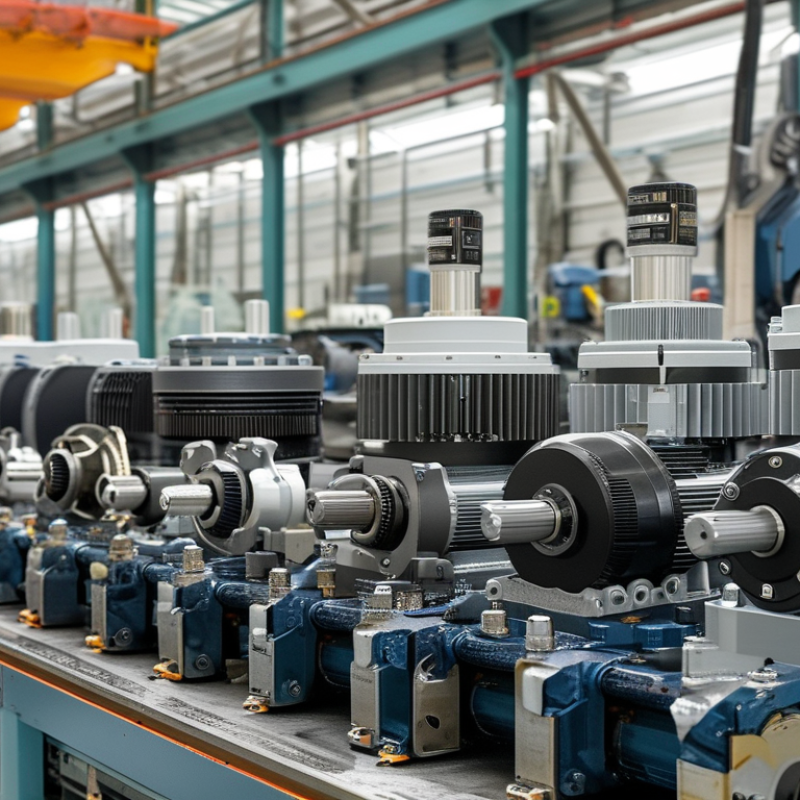
An electric gear motor combines an electric motor with a gearbox in one compact unit. The motor creates rotation, while the gears reduce speed and increase usable torque. This arrangement can move heavier loads than a motor alone. Common parts include copper windings, permanent magnets, bearings, shafts, seals, and hardened gears. In a small conveyor, the output shaft may turn slowly while maintaining steady pulling force.
The working process is straightforward. Electrical current creates a magnetic field inside the motor. That field produces rotor movement. The gearbox then passes this movement through several gear stages. Each stage changes speed, torque, and sometimes rotation direction. Spur gears are efficient and economical. Helical gears usually run more quietly. Worm gears offer high reduction, but they may lose more energy as heat. Performance depends on load, duty cycle, voltage, lubrication, and cooling.
When assessing Chinese electric gear motor manufacturers, request load curves, efficiency data, noise readings, and protection ratings. Ask how engineers test winding temperature and gearbox wear. A practical check involves running the motor under its real load, not only checking an unloaded speed. I have found that a motor with impressive torque can still disappoint when starts are frequent or ventilation is poor. Selection is rarely perfect on the first attempt. Mounting accuracy, shaft alignment, and actual operating temperature deserve another review.
China has become a major electric gear motor manufacturing base because its supply chain is broad, responsive, and cost competitive. Manufacturers can source motors, gears, bearings, magnets, housings, and electronic controls within nearby industrial clusters. This reduces transport time and supports faster design changes. Many factories also serve automation, conveyors, medical equipment, agricultural machines, and household systems.
Experienced producers usually combine CNC machining, automated winding, gear cutting, and end-of-line testing. Quality checks may include torque measurement, noise testing, temperature-rise testing, insulation checks, and endurance trials. During factory evaluations, buyers should inspect calibration records and test samples from different production batches. A polished sample proves little. Consistency matters more. Some suppliers offer strong engineering support, while others mainly compete on price. That difference is easy to miss.
Ask for drawings, motor curves, gear ratios, duty cycles, and protection ratings before requesting a quotation. Confirm whether the quoted torque is continuous or temporary. Request a sample with your actual load conditions. Check backlash, vibration, starting current, and operating temperature. Review quality certificates, process controls, and warranty terms. Factory visits can reveal practical details, such as poor cable routing or unclear inspection labels. Do not rely only on catalog data. A small pilot order may expose weaknesses before mass production, although it adds time and cost.
A leading manufacturer proves performance beyond a polished catalog. Check motor efficiency, gearbox materials, rated torque, noise levels, and thermal limits. Request complete datasheets, test reports, and sample units. A serious supplier explains tolerances clearly. It should also provide traceable quality records, stable production capacity, and responsive engineering support. Factory audits can reveal winding lines, gear inspection tools, aging-test stations, and clean assembly areas. Photos alone are not enough.
Ask how the manufacturer handles custom voltage, mounting dimensions, duty cycles, and harsh environments. Review similar applications, not only general testimonials. Confirm whether testing follows recognized technical standards and whether calibration records are current. Speak with an engineer, not only a sales contact. Lead times should match actual capacity. A low quotation can hide weaker bearings, inconsistent lubrication, or limited after-sales support. I would still verify every claim. Even experienced buyers can overtrust impressive samples.
Tips
Compare at least three factories using the same specification sheet. Measure sample current, temperature rise, backlash, and sound under load. Ask for replacement-part policies and warranty conditions in writing. Visit the facility when possible. If travel is difficult, request a live video inspection with date-stamped production evidence. Small details matter. A supplier welcoming difficult questions is often more reliable than one offering perfect answers.
Electric gear motors from Chinese suppliers serve factories, warehouses, renewable-energy projects, and transport equipment. Their compact design delivers controlled torque for conveyors, mixers, lifts, and automated gates. Many buyers request low-voltage motors, stainless-steel housings, or custom output shafts for specific machines.
Industrial automation is a major user. The International Federation of Robotics reported 541,302 industrial robot installations worldwide in 2023, with China accounting for about 276,000 units. Those robots depend on geared drives in positioning systems, conveyors, palletizers, and material-handling lines. E-commerce warehouses also use gear motors for rollers and sorting equipment. Fast cycles matter there. So does quiet operation.
Renewable energy creates another growing application. The International Energy Agency reported that global solar photovoltaic capacity exceeded 1,400 gigawatts by the end of 2023. Chinese suppliers provide gear motors for solar trackers, cooling systems, and panel-cleaning equipment. Food processing, packaging, agriculture, and wastewater treatment use them as well. Buyers should verify thermal ratings, ingress protection, noise levels, and load calculations before ordering. A cheaper unit may fail under continuous duty. That lesson is easy to miss. Reports show market scale, but they do not replace site testing, service checks, or careful supplier audits.
When evaluating China’s electric gear motor manufacturers, start with measurable evidence, not polished catalogs. The U.S. Department of Energy reports that motor systems consume about 70% of industrial electricity. Efficiency, therefore, affects operating cost far beyond the purchase price. Request torque curves, efficiency data, noise limits, thermal test results, and a sample tested under your actual load. A small mismatch in duty cycle can create overheating, vibration, or premature gear wear.
Certification needs careful checking. IEC 60034 standards support motor performance and testing, while ISO 9001 indicates a documented quality system. However, a certificate alone proves little. Confirm its issuer, validity, covered factory, and exact product scope. Ask for factory acceptance test records and traceability from raw gears to final assembly. Reports should identify test conditions, instruments, and tolerances. Vague documents deserve questions.
Supplier reliability is visible in daily controls. Examine incoming inspection, gear tooth measurement, bearing storage, and final run-in procedures. Request recent on-time delivery data, warranty claim rates, spare-parts plans, and a corrective-action example. The World Bank’s Logistics Performance Index shows that customs, tracking, and delivery reliability strongly influence supply-chain performance. Remote audits help, but they cannot replace production visits. My practical mistake was trusting a successful sample too quickly; production consistency matters more than one impressive unit.
A neutral procurement scorecard based on commonly used industrial verification criteria. The percentages represent recommended evaluation weightings rather than data from any specific company or brand.
ISO 9001 supports quality-management verification; IEC 60034 covers rotating electrical machines; IEC 60529 is used to classify enclosure protection through IP ratings; CE marking may apply when the product falls under relevant European Union legislation. Always verify certificate scope, test reports, traceability records, and service commitments for the exact gear motor model.
: Factories, warehouses, renewable-energy projects, transport equipment, agriculture, and wastewater facilities use them.
They drive conveyors, mixers, lifts, automated gates, rollers, palletizers, and sorting systems.
Their compact bodies provide controlled torque for positioning, material handling, and repeated machine movements.
Buyers may request low-voltage motors, stainless-steel housings, custom shafts, quiet operation, or specific protection levels.
They operate solar trackers, cooling equipment, and panel-cleaning mechanisms under changing outdoor conditions.
Check torque curves, efficiency, thermal ratings, noise limits, ingress protection, duty cycles, and load calculations.
Not always. A cheaper motor may overheat, vibrate, or wear quickly under constant loads.
Confirm the issuer, validity, factory location, product scope, testing conditions, instruments, and stated tolerances.
Review inspection records, gear measurements, bearing storage, run-in procedures, delivery data, warranty claims, and spare-parts plans.
No. One sample can look excellent, while larger production may show inconsistent gears, noise, or assembly quality.
An Electric Gear Motor combines an electric motor with a gear system to convert electrical energy into controlled mechanical motion. The motor generates rotation, while the gears adjust speed, torque, and direction to meet the needs of different equipment. China has become a major manufacturing base because of its developed industrial supply chains, engineering capabilities, production scale, and ability to provide customized solutions at competitive costs.
When selecting a leading Chinese manufacturer, buyers should examine technical expertise, product consistency, manufacturing capacity, customization services, and after-sales support. Electric gear motors from Chinese suppliers are widely used in automation, conveyors, packaging machinery, robotics, material handling, medical equipment, renewable energy systems, and other industrial applications. A reliable evaluation should also include quality-control procedures, material standards, testing methods, relevant certifications, delivery performance, communication, and long-term service capabilities. Comparing samples, technical documents, inspection records, and customer references can help buyers choose a dependable supplier that offers safe, efficient, and durable products.
