Modulox Drive
Choosing among China’s top Rotary Motor manufacturers and suppliers requires more than comparing catalog prices. A dependable partner should demonstrate stable torque, efficient heat dissipation, controlled vibration, and consistent performance across production batches. These details matter when a motor runs inside conveyors, medical equipment, packaging lines, or precision automation.
Nikola Tesla, whose induction motor work shaped modern electrical engineering, once said, “The present is theirs; the future, for which I really worked, is mine.” His words remain relevant here. Motor technology continues to improve through better materials, smarter controls, and tighter manufacturing tolerances. However, innovation alone is not enough. Buyers should review factory capability, winding processes, rotor balancing, quality records, testing equipment, and after-sales support. Ask for test reports, not only attractive photographs.
The strongest Chinese suppliers usually provide clear specifications, sample testing, customization support, and practical export experience. Check rated voltage, speed range, starting torque, duty cycle, insulation class, protection rating, and operating temperature. A factory visit or independent inspection can reveal details that brochures hide.
No ranking is flawless. Supplier performance may vary by model and production period. A low price can also conceal higher maintenance costs. Therefore, this guide examines manufacturers through technical evidence, application experience, certification practices, and customer reliability. The goal is not to praise every company. It is to help readers identify a Rotary Motor supplier that performs steadily in real working conditions. That requires patience. Sometimes, the overlooked details decide everything.
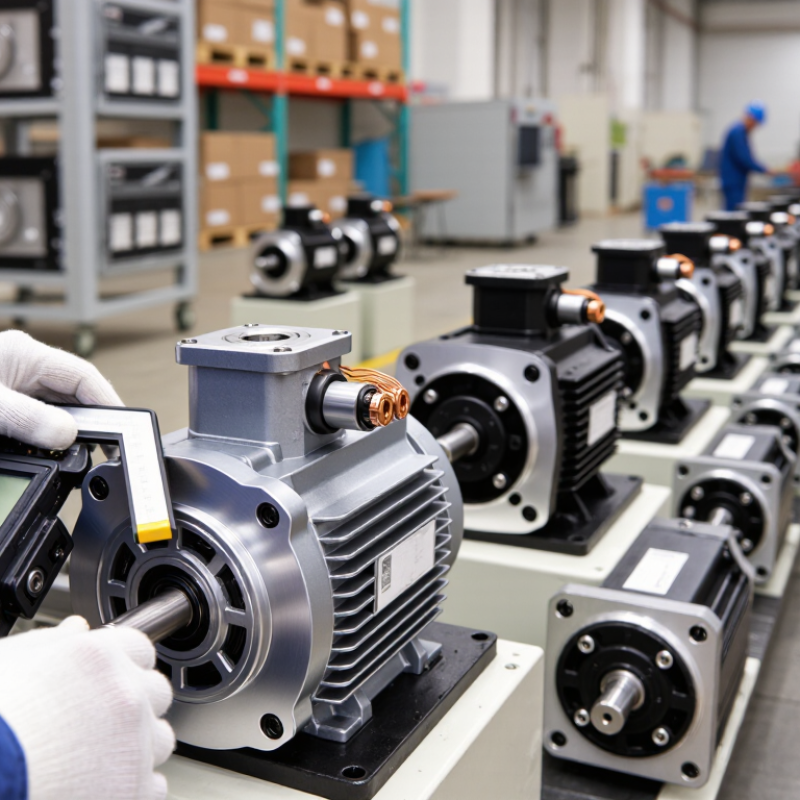
A rotary motor converts electrical energy into mechanical rotation. Unlike a linear motor, it delivers motion around a shaft. Inside, the stator produces a magnetic field, while the rotor responds to that field and turns. The shaft then transfers torque to a fan, pump, conveyor, or gearbox.
In a brushed DC motor, a commutator switches current through the windings as the rotor moves. This keeps the torque moving in one direction, but brushes gradually wear. A brushless motor uses electronic switching instead. Induction motors create rotor current through electromagnetic induction, so they usually need no physical commutator. The principle sounds simple. Real operation is less forgiving.
When I evaluate motors from manufacturers and suppliers, I check rated voltage, continuous torque, speed range, insulation, bearing quality, and heat dissipation. A motor that performs well for ten minutes may overheat during an eight-hour shift. Noise and vibration also reveal problems that a datasheet can hide. Mounting alignment matters. Even a small shaft offset can shorten bearing life.
Control quality is equally important. Poorly matched current settings may cause torque ripple, heating, or unstable starting. I have seen compact motors exceed expectations, but I have also seen attractive specifications fail under real loads. Testing with the intended controller and workload remains essential. Temperature logging helps expose weaknesses early.
China’s rotary motor industry covers several practical designs. Brushed DC motors remain common in pumps, valves, toys, and compact appliances. Brushless DC motors suit fans, drones, medical devices, and battery-powered equipment. They offer longer service life because electronic commutation replaces mechanical brushes. AC induction motors still power conveyors, compressors, and workshop machinery. They tolerate dusty environments, but their speed control may require a variable-frequency drive.
Servo and stepper motors serve applications needing controlled rotation. Servo motors combine feedback, drive electronics, and accurate positioning. Stepper motors move in fixed increments, making them useful in printers, small CNC equipment, and inspection tables. China’s large automation market supports these product categories. The International Federation of Robotics reported 276,288 industrial robot installations in China during 2023, equal to about 51% of global installations. That figure indicates strong demand for compact, programmable motor systems, not automatic proof of superior quality.
Traction motors form another major category. Permanent-magnet synchronous motors deliver high efficiency and strong torque in electric vehicles. Switched reluctance motors can reduce reliance on permanent magnets, although noise and control complexity remain concerns. The International Energy Agency reported that China sold more than eight million electric cars in 2023, representing nearly 60% of global electric-car sales. Buyers should still inspect winding insulation, bearing tolerance, thermal testing, and controller compatibility. Datasheets can look precise. Real performance may differ. A supplier’s sample test, load curve, and failure data deserve more attention than a low quoted price.
A leading motor manufacturer should prove performance with repeatable test data, not just polished brochures. The International Energy Agency’s 2011 report, Energy-Efficiency Policy Opportunities for Electric Motor-Driven Systems, estimates that motor systems use about 45% of global electricity. The U.S. Department of Energy’s 2014 motor-systems sourcebook puts the share at about 69% of U.S. manufacturing electricity use. These figures make efficiency claims worth checking closely.
Ask for test records tied to the exact motor model and rated load. Review efficiency, torque-speed curves, temperature rise, vibration, and noise measurements. Check whether the factory can trace components and production batches to a serial number. A useful audit includes watching a motor run under load, then comparing its readings with the supplied report. Small discrepancies matter.
Also assess engineering support, sample consistency, delivery performance, and experience with your application. Request references for similar duty cycles, such as frequent starts or continuous operation. Confirm which tests are performed in-house and which are independently verified. A tidy factory is encouraging, but it is not proof of quality. I would still ask how rejected units are recorded; suppliers do not always make that process easy to assess.
Rotary motor suppliers are best compared by verified capabilities, not catalog breadth.
For pumps, conveyors, and machine tools, ask whether they offer induction, permanent-magnet, servo, or geared motors in suitable frame sizes. Confirm duty cycle, voltage, speed range, and mounting dimensions.
That matters. A 2014 U.S. Department of Energy sourcebook estimates motor-driven systems consume about 68% of electricity used in U.S. manufacturing.
Even small efficiency gaps can affect lifetime energy costs. Yet peak-efficiency figures alone can mislead.
Strong suppliers can provide winding options, encoder integration, gearboxes, thermal protection, and documented balancing and vibration tests.
Ask for efficiency curves at several loads, temperature-rise results, insulation class, ingress rating, and test conditions. These details help determine whether a motor suits dusty floors, frequent starts, or continuous operation.
Custom engineering matters. Low-speed torque, for example, may require a larger frame or reduction gearbox, adding weight and cost.
Request traceable test records and sample validation before approving a production batch.
Supplier capabilities vary; broad performance claims deserve caution when test methods are missing.
China Top Rotary Motor Manufacturers and Suppliers?
How to Select a Reliable Chinese Rotary Motor Supplier
Choosing a rotary motor supplier takes more than comparing prices. Start with the application: required torque, speed range, duty cycle, mounting dimensions, and operating temperature. Share these details in writing and ask the supplier to confirm them against a motor datasheet. A vague answer about “standard performance” is not enough. Request test records for key specifications, such as rated speed and temperature rise, and check whether the test conditions match your intended use.
Review the supplier’s quality process, not just its product photos. Ask how incoming materials, assembly, and final inspection are documented. A factory tour, live video walkthrough, or sample evaluation can help clarify what is actually produced in-house. Check how the team handles design changes, delivery delays, and technical questions after shipment. A polished brochure can still leave gaps; specifications may need another round of clarification. That extra step is sometimes inconvenient, but it can prevent costly mismatches.
Tips: Send a clear drawing and operating profile. Confirm lead time, packaging, warranty terms, and spare-part availability in writing. Test a sample under realistic load before approving a larger order. Keep the conversation practical: precise questions usually reveal more than broad promises.
| Evaluation Area | What to Confirm | Reliable Evidence to Request | Why It Matters |
|---|---|---|---|
| Motor type and application fit | Confirm whether the requirement is for an AC induction, synchronous, brushless DC, servo, or other rotary motor, and define its intended duty and operating environment. | Written technical proposal identifying the motor type, intended application, operating conditions, and any required drive or controller. | Different motor technologies have different control, starting, speed, and torque characteristics; the motor and drive should be evaluated as a system. |
| Rated performance | Check rated output, voltage, frequency, current, speed, torque, duty rating, and permissible operating conditions against the application requirements. | Datasheet and nameplate sample with units, rated conditions, tolerances, and applicable test methods clearly stated. | Comparable, clearly specified ratings help prevent selection based on incomplete or mismatched performance claims. |
| Efficiency and losses | Ask for efficiency at the relevant rated conditions and clarify the applicable efficiency classification and test basis, where relevant to the motor type and market. | Test report or declaration showing the tested motor configuration, operating point, method, and date. | Efficiency depends on the motor design and test conditions; figures should be compared on a consistent basis. |
| Enclosure and protection | Match the enclosure and ingress-protection level to the installation environment, including exposure to dust or water. | Product documentation stating the IP code and the conditions or configuration to which it applies. | IEC 60529 classifies degrees of protection provided by electrical enclosures. An IP rating does not, by itself, describe every environmental or safety characteristic. |
| Mounting and dimensions | Verify frame size, mounting arrangement, shaft dimensions, terminal-box position, and mechanical interface with the driven equipment. | Dimensioned drawings, shaft details, mounting information, and confirmation of any nonstandard requirements. | IEC 60072 covers dimensions and output series for certain rotating electrical machines; confirm that the specific motor and application fall within its scope. |
| Standards and compliance | Identify the standards and regulatory requirements applicable to the motor, destination market, and intended installation. | Relevant declarations, certificates, test reports, and model references that match the offered product and destination market. | IEC 60034 is a series covering rotating electrical machines. Applicable requirements vary by product, configuration, and market; check the exact scope rather than relying on a general standards claim. |
| Quality management | Review how the supplier controls production, inspection, nonconforming products, and changes to materials or processes. | Current quality-management certificate, if claimed, with scope and issuing body details; inspection procedures and sample quality records. | ISO 9001 specifies requirements for a quality management system. Certification alone does not establish that a specific motor meets its performance requirements. |
| Testing and traceability | Clarify which routine tests are performed, how test results are recorded, and how finished motors are linked to production records. | Sample routine-test report, serial-number or batch-traceability procedure, and acceptance criteria agreed before production. | Documented testing and traceability make it easier to verify the delivered product and investigate quality issues. |
| Customization and engineering support | Assess the supplier’s ability to handle required changes, such as shaft or mounting details, leads, sensors, insulation, or operating specifications. | Written confirmation of the approved specification, drawings, revision control, and responsibilities for design changes. | Clear change control helps ensure that samples, production units, and replacement parts follow the same approved configuration. |
| Commercial and delivery terms | Confirm quotation validity, minimum order quantity, tooling charges, production lead time, packaging, payment terms, and delivery terms. | Itemized quotation and purchase-order confirmation stating the product specification, quantities, schedule, and agreed trade terms. | Written terms reduce ambiguity about cost, delivery responsibilities, and the exact product being purchased. |
| Warranty and after-sales support | Check warranty duration, exclusions, claim procedure, spare-parts availability, and technical support arrangements. | Written warranty policy, service contact details, and documented process for handling failures or replacement parts. | Defined support terms help buyers plan maintenance and address product issues after delivery. |
| Supplier verification | Verify the legal entity, manufacturing or trading role, product scope, and consistency of information across documents and communications. | Business registration details, facility or production-process information where relevant, product-specific records, and independent checks appropriate to the transaction. | Verification helps clarify who is responsible for manufacturing, quality, documentation, and after-sales service. |
A rotary motor converts electrical energy into shaft rotation. The shaft transfers torque to equipment such as pumps, fans, or conveyors.
The stator creates a magnetic field. The rotor responds and turns inside it. Simple principle, demanding operation.
Brushed motors use brushes and a commutator to switch current. Brushless motors use electronic switching instead. Brushes wear gradually.
Check voltage, continuous torque, speed range, insulation, bearings, and heat dissipation. Mounting dimensions also matter.
A motor may perform well briefly but overheat during long shifts. Poor cooling, excessive load, or incorrect current settings can cause trouble.
Request repeatable test data for the exact model. Review efficiency, torque curves, temperature rise, vibration, and noise. Brochures are not proof.
Share the required torque, speed, duty cycle, dimensions, and temperature. Ask for matching datasheets and test conditions. Vague answers deserve another question.
Test it with the intended controller and realistic workload. Log temperature, noise, vibration, speed, and torque. A short test may miss weaknesses.
Even a small shaft offset can increase vibration. It may shorten bearing life and reduce reliability. Alignment details are easy to underestimate.
Confirm lead time, packaging, warranty terms, spare parts, and design changes in writing. Keep serial numbers and test records. I would still verify everything twice.
This article explains what a Rotary Motor is, how electrical energy is converted into rotational motion, and which motor types are commonly manufactured in China. It outlines practical ways to assess manufacturers, including their engineering capabilities, production consistency, quality-control processes, customization options, and technical support. Readers will also learn how suppliers may differ in the motor designs, performance ranges, and applications they can provide.
To select a reliable Chinese supplier, buyers should first define operating requirements such as torque, speed, power, duty cycle, and installation conditions. They can then compare product specifications, request relevant test data and samples, clarify lead times and warranty terms, and evaluate communication and after-sales service. A careful, requirement-based comparison helps identify a supplier whose capabilities align with the intended application and long-term needs.
